
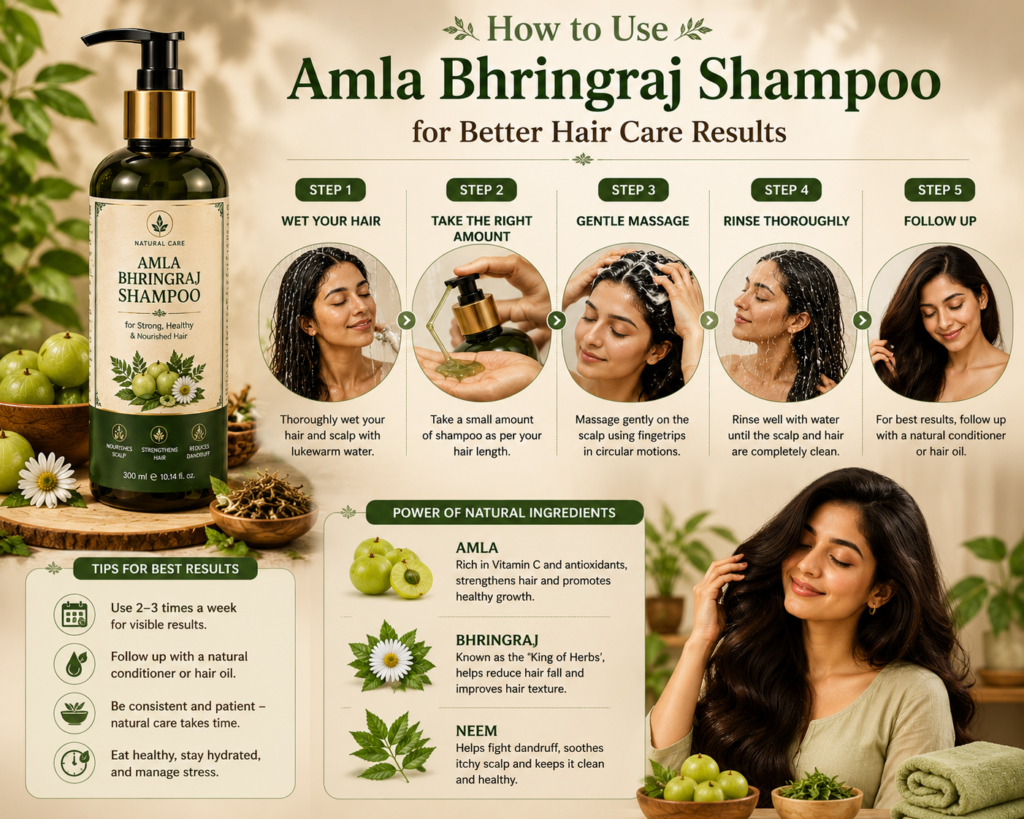
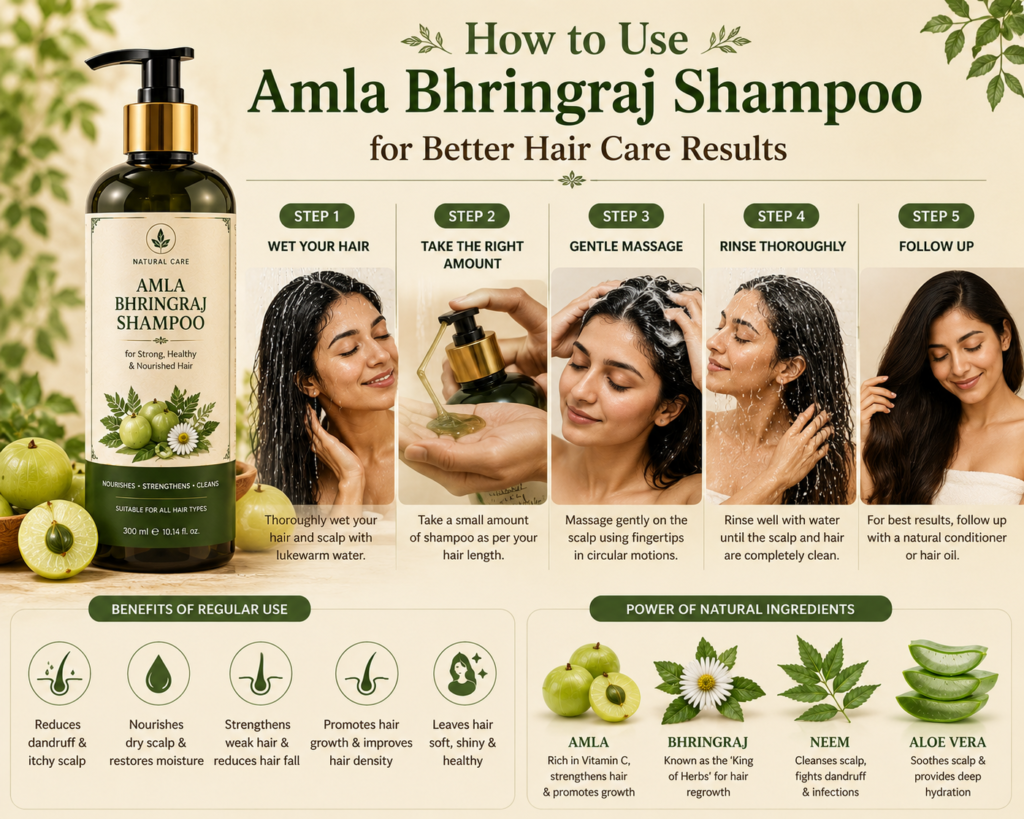
Using the right shampoo is important, but using it correctly is equally important. Many people buy a good Ayurvedic shampoo for hair growth, dandruff, weak roots, or dry scalp, but they do not get the best results because they apply it the wrong way. Shampoo should not be used only on the hair length. It should be applied mainly to the scalp, because the scalp is where oil, sweat, dandruff, flakes, and buildup collect.
Amla Bhringraj Shampoo is made to support scalp cleansing, hair growth, dandruff control, root nourishment, and better hair texture. Amla helps improve shine, strength, and scalp freshness, while Bhringraj supports scalp nourishment and stronger roots. When used properly and consistently, Amla Bhringraj Shampoo can help your hair feel cleaner, fresher, stronger, softer, and more manageable.
If you are dealing with dryness, flakes, or weak hair, you can also read this guide on Amla Bhringraj Shampoo for dry scalp, dandruff, and weak hair to understand how it supports scalp comfort and healthier-looking hair.
If you want better hair care results, follow the right washing routine, avoid common shampoo mistakes, and combine shampoo with suitable hair oil, serum, and hair capsules where needed. You can explore Taruveeda’s complete range of Ayurvedic hair care products for regular scalp nourishment, dandruff care, hair fall support, and overall hair wellness.
To understand the ingredient value in more detail, you can also read about Amla Bhringraj Shampoo benefits for hair growth and dandruff control.
Why Proper Shampoo Use Matters
Proper shampoo use matters because hair care results depend not only on the product but also on how you apply it. Even a good shampoo may not work properly if it is applied too quickly, not massaged into the scalp, or not rinsed well.
The scalp collects sweat, oil, dust, pollution, dandruff flakes, dead skin cells, and product residue. If this buildup is not removed properly, the scalp may feel itchy, oily, flaky, or heavy. This can affect the roots and make hair look dull, weak, or rough.
A proper shampoo routine helps:
- Clean the scalp properly
- Remove sweat, oil, dirt, and buildup
- Reduce visible flakes
- Refresh the scalp
- Support stronger roots
- Improve hair texture
- Reduce dullness
- Make hair feel lighter and cleaner
- Support better results from hair oil and serum
Many people make the mistake of applying shampoo only to the hair length. This may clean the strands slightly, but it does not clean the scalp properly. Since hair health starts at the scalp, shampoo should always be applied first to the scalp.
Proper use also helps avoid dryness. If you use too much shampoo, wash too often, or rub the hair harshly, your hair may become rough and frizzy. A balanced method gives better results.
Step-by-Step Guide to Using Amla Bhringraj Shampoo
Amla Bhringraj Shampoo works best when used with a simple and correct washing method. You do not need a complicated routine, but you should give attention to the scalp and rinse properly.
Wet Hair Properly
Start by wetting your hair and scalp properly with clean water. Do not apply shampoo directly to dry or half-wet hair. When the hair is fully wet, shampoo spreads more evenly and works better on the scalp.
Use normal or lukewarm water. Avoid very hot water because it can make the scalp dry and increase frizz. Hot water can also make dry scalp and dandruff worse for some people.
Make sure the water reaches the scalp, especially if your hair is thick or long. If only the outer hair gets wet, shampoo will not spread properly near the roots.
Apply Shampoo to Scalp
Take a small amount of Amla Bhringraj Shampoo in your palm. Start with a small quantity. You can take more only if your scalp is very oily, your hair is long, or you have applied hair oil before washing.
Apply the shampoo mainly to the scalp. Focus on the crown area, front hairline, sides, and back of the head. These areas often collect sweat, oil, and buildup.
Do not apply too much shampoo directly to the hair length. The hair length usually gets cleaned when the shampoo runs down during rinsing. Applying too much shampoo to the ends can make them feel dry, especially if your hair is already rough or frizzy.
Massage Gently
After applying shampoo, massage your scalp gently with fingertips for 1–2 minutes. Use soft circular movements. Do not scratch with nails because scratching can irritate the scalp and increase flakes.
Gentle massage helps:
- Spread shampoo evenly
- Remove scalp buildup
- Refresh the scalp
- Support better cleansing
- Improve scalp comfort
- Make the hair wash more effective
If you have dandruff, avoid aggressive rubbing. Strong rubbing may loosen flakes temporarily, but it can also irritate the scalp. A gentle massage is better for regular care.
Leave for a Short Time
After massaging, leave the shampoo on the scalp for a short time, around 1 minute. This allows the shampoo to work on oil, dirt, sweat, and buildup before rinsing.
You do not need to leave shampoo for too long. Shampoo is a wash-off product, so keeping it for a very long time is not necessary. Overdoing it may make the scalp feel dry, especially if your scalp is sensitive.
For regular use, massage for 1–2 minutes and leave briefly before rinsing.
Rinse Well
Rinsing is one of the most important steps. Shampoo residue left on the scalp can cause dryness, itching, roughness, or buildup. Rinse your hair thoroughly with clean water until the scalp feels fresh and the water runs clear.
Pay attention to areas behind the ears, near the neck, and around the crown. These areas often hold shampoo residue if not rinsed properly.
After rinsing, do not rub wet hair harshly with a towel. Wet hair is more delicate and can break easily. Gently squeeze out excess water and use a soft towel to pat dry.
How Often Should You Use Amla Bhringraj Shampoo?
You can use Amla Bhringraj Shampoo 2–3 times a week, depending on your scalp type, hair concern, and lifestyle.
For oily scalp, use it around 3 times a week. Oily scalp collects sweat, dust, and buildup faster, so regular cleansing helps keep the scalp fresh.
For dry scalp, use it 1–2 times a week. Washing too often can increase dryness, so keep the routine gentle.
For dandruff-prone scalp, use it consistently 2–3 times a week to support scalp cleanliness and reduce visible flakes.
For normal scalp, 2 times a week is usually enough.
For people who sweat a lot, work outdoors, wear helmets, or apply oil often, shampoo frequency may need to be adjusted. The aim is to keep the scalp clean without overwashing.
Should You Use Hair Oil Before Shampoo?
Yes, you can use hair oil before Amla Bhringraj Shampoo, especially if your scalp feels dry or your hair feels weak, rough, or dull. Hair oil can help provide pre-wash nourishment and make the hair care routine more complete.
If you use hair oil, apply it to the scalp and hair length 1–2 hours before shampooing. Massage gently with fingertips. Avoid scratching the scalp or pulling the hair.
Hair oil before shampoo may help:
- Nourish dry scalp
- Support weak roots
- Reduce roughness
- Improve softness
- Make hair feel smoother
- Support a traditional Ayurvedic hair care routine
However, do not leave heavy oil on the scalp for too long if you have dandruff or oily scalp. Excess oil can attract dust and may increase buildup if not washed properly.
After oiling, use Amla Bhringraj Shampoo to cleanse the scalp. If the scalp still feels oily after one wash, you can repeat shampoo once more gently.
Can You Use Conditioner After Amla Bhringraj Shampoo?
Yes, you can use conditioner after Amla Bhringraj Shampoo if your hair length or ends feel dry, rough, frizzy, or tangled. Shampoo mainly cleans the scalp, while conditioner helps soften the hair length.
Apply conditioner only from mid-length to ends. Avoid applying conditioner directly to the scalp, especially if you have oily scalp, dandruff, or buildup. Conditioner on the scalp may make the scalp feel greasy or heavy for some people.
Conditioner can help:
- Reduce dryness on hair ends
- Improve softness
- Make hair easier to detangle
- Reduce frizz
- Improve manageability
- Support smoother texture
If your hair is naturally oily and does not feel dry after shampoo, you may not need conditioner every time. But if your hair is long, dry, curly, coloured, or heat-styled, conditioner can be helpful.
Common Mistakes to Avoid While Shampooing
Many people damage their hair or scalp because of small shampooing mistakes. Avoiding these mistakes can improve your results.
1. Using Too Much Shampoo
More shampoo does not mean better cleaning. Too much shampoo can make hair feel dry or rough. Start with a small amount and use more only if needed.
2. Applying Shampoo Only on Hair Length
The scalp needs the most cleaning. Always apply shampoo mainly to the scalp first.
3. Scratching with Nails
Scratching can irritate the scalp and increase dandruff or sensitivity. Use fingertips gently.
4. Not Wetting Hair Properly
If the hair is not fully wet, shampoo will not spread evenly and may not clean properly.
5. Washing with Very Hot Water
Hot water can dry the scalp and make frizz worse. Use normal or lukewarm water.
6. Not Rinsing Properly
Leftover shampoo can cause itching, dryness, and buildup. Rinse thoroughly.
7. Overwashing Hair
Washing daily is not needed for most people. Overwashing can dry the scalp and weaken hair texture.
8. Rubbing Wet Hair Harshly
Wet hair is delicate. Rough towel drying can cause breakage and frizz.
9. Applying Conditioner on Scalp
Conditioner should usually be applied to hair length and ends, not the scalp.
10. Changing Products Too Quickly
Hair care needs consistency. Use a shampoo regularly for a few weeks before judging results.
Best Hair Care Routine with Taruveeda Products
For better results, you can build a simple Taruveeda hair care routine based on your hair concern. The routine does not need to be complicated. It should include scalp nourishment, proper cleansing, hair protection, and internal support where relevant.
Hair Oil
Use Taruveeda Ayurvedic Hair Oil before shampoo if your scalp feels dry, your hair feels weak, or you want extra nourishment. Apply the oil to the scalp and massage gently for a few minutes. Keep it for 1–2 hours before washing.
Hair oil can help:
- Nourish scalp
- Support weak roots
- Reduce dryness
- Improve softness
- Support hair strength
- Make hair feel healthier over time
Use hair oil once or twice a week depending on your scalp type. If you have oily scalp or dandruff, avoid applying too much oil and wash it out properly.
Shampoo
Use Taruveeda Amla Bhringraj Shampoo to cleanse the scalp and support hair growth, dandruff control, and root nourishment. Apply it mainly to the scalp and massage gently before rinsing.
Taruveeda Amla Bhringraj Shampoo helps:
- Clean scalp buildup
- Support healthy hair growth
- Reduce visible dandruff
- Nourish the scalp
- Strengthen weak roots
- Improve shine and softness
- Support healthier-looking texture
Use it 2–3 times a week depending on your scalp type and hair concern.
Hair Serum
Use Taruveeda Hair Serum after washing when the hair is towel-dried or dry, depending on the product usage directions. Hair serum is useful for hair length, not usually for scalp application unless mentioned on the label.
Hair serum can help:
- Reduce frizz
- Improve smoothness
- Add shine
- Make hair manageable
- Protect hair length from roughness
- Improve finished look
Apply a small amount to the hair length and ends. Avoid using too much serum because it can make hair look greasy.
Hair Capsules, Where Relevant
Hair capsules may be useful where hair concerns are linked with internal nourishment, diet gaps, or weak hair health. Unlike shampoo and serum, capsules support hair from inside.
Hair capsules may help support:
- Internal hair nutrition
- Hair strength
- Hair fall support
- Overall hair health
- Long-term routine care
Use hair capsules only as directed on the product label. If you have medical conditions, are pregnant, breastfeeding, taking medication, or have severe hair fall, consult a healthcare professional before using supplements.
Hair capsules should not replace a balanced diet. They work best along with proper food, sleep, hydration, scalp care, and regular hair washing.
When Can You Expect Visible Improvement?
Results from Amla Bhringraj Shampoo depend on your scalp condition, hair concern, routine, diet, and consistency. Herbal hair care usually works gradually, so regular use is important.
You may notice some changes earlier, such as:
- Cleaner scalp after the first few washes
- Fresher scalp feeling
- Reduced oiliness or buildup
- Softer and smoother hair texture
- Better manageability
For concerns like dandruff, weak roots, rough texture, and hair fall caused by breakage or scalp condition, results may take a few weeks of consistent use.
A practical timeline can be:
- After 1–2 washes: scalp feels cleaner and fresher
- After 2–4 weeks: hair may feel smoother, lighter, and more manageable
- After 4–8 weeks: visible improvement in texture, breakage, and scalp comfort may be noticed with consistent use
Hair growth support takes time. Do not expect overnight results. Hair health depends on scalp care, diet, stress, sleep, hormones, and overall routine.
If hair fall is sudden, severe, patchy, or continues despite care, consult a dermatologist.
FAQs About Using Amla Bhringraj Shampoo
1. How do I use Amla Bhringraj Shampoo?
Wet your hair and scalp properly, apply the shampoo mainly to the scalp, massage gently with fingertips for 1–2 minutes, leave briefly, and rinse thoroughly with clean water.
2. Can I use Amla Bhringraj Shampoo daily?
Daily use is usually not needed for most people. You can use it 2–3 times a week depending on your scalp type. If your scalp is dry, use it less often.
3. Should I apply shampoo to scalp or hair length?
Apply shampoo mainly to the scalp. The hair length gets cleaned when the shampoo flows down during rinsing. This prevents the ends from becoming too dry.
4. Can I use oil before Amla Bhringraj Shampoo?
Yes, you can use hair oil 1–2 hours before shampooing. If you apply heavy oil, you may need a second gentle wash to remove excess oil.
5. Can I use conditioner after Amla Bhringraj Shampoo?
Yes, you can use conditioner after shampooing if your hair length or ends feel dry, rough, or frizzy. Apply conditioner only to the hair length and ends.
6. How often should I use Amla Bhringraj Shampoo for dandruff?
For dandruff-prone scalp, use it 2–3 times a week consistently. If dandruff is severe, painful, or comes with redness, consult a dermatologist.
7. How long should I leave Amla Bhringraj Shampoo on my scalp?
After massaging, leave it for around 1 minute before rinsing. You do not need to keep shampoo on the scalp for a long time.
8. Can Amla Bhringraj Shampoo help with hair fall?
It can support hair fall control when hair fall is linked with weak roots, dandruff, scalp buildup, dryness, or breakage. Severe or sudden hair fall may need medical advice.
9. Can men and women both use Amla Bhringraj Shampoo?
Yes, both men and women can use Amla Bhringraj Shampoo. It is suitable for common concerns like hair fall, dandruff, weak roots, dullness, and scalp buildup.
10. Why choose Taruveeda Amla Bhringraj Shampoo?
Taruveeda Amla Bhringraj Shampoo combines Amla and Bhringraj to support hair growth, dandruff control, scalp nourishment, stronger roots, shine, softness, and healthier-looking hair texture.